How Hidden Technology Is Changing Everyday Objects
How Hidden Technology Is Changing Everyday Objects
How Hidden Technology Is Changing Everyday Objects
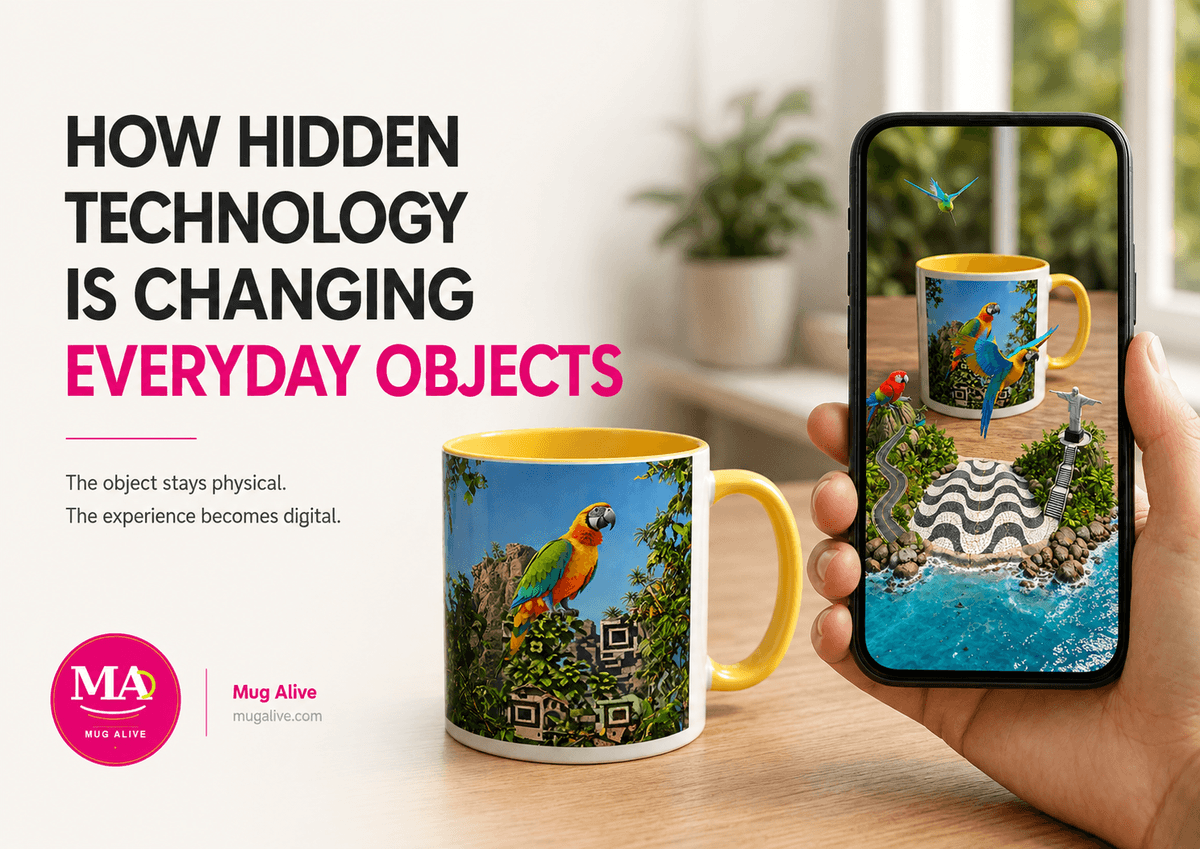
The most interesting technology is not always the technology we can see.
Sometimes it disappears inside familiar objects.
A painting.
A package.
A book.
A coffee mug.
The physical object remains recognizable.
But a smartphone can reveal another layer.
This is part of a broader shift toward physical objects carrying digital experiences.
From Smart Objects to Invisible Technology
For years, connected products often looked technological.
Screens, buttons, LEDs and electronic components made the technology obvious.
A different approach is now emerging.
The object can remain visually simple while technology exists quietly around it.
The user discovers the digital layer only when they choose to interact with it.
That makes technology feel less like hardware and more like an experience.
The Physical Object Still Matters
Digital experiences do not have to replace physical objects.
In many cases, the physical object is exactly what gives the experience meaning.
You can hold it.
Use it.
Display it.
Give it to someone.
The digital layer adds something without removing those qualities.
That distinction matters.
A digital animation alone is content.
A physical object carrying a hidden animation becomes an experience connected to a real object.
The Smartphone Becomes the Window
The smartphone is already in our hands.
That makes it a natural bridge between physical and digital environments.
Instead of adding a screen to every object, the phone can become the screen.
The physical product remains simple.
The smartphone reveals what cannot normally be seen.
Mug Alive: A Familiar Object With a Second Layer
Mug Alive applies this idea to one of the most familiar objects in everyday life.
A ceramic coffee mug.
Nothing needs to move in the physical world.
The mug stays on the table.
When viewed through a smartphone, a hidden scene appears on the screen.
The physical artwork becomes the entrance to the digital experience.
No dedicated app is required.
Why This Matters for Gifts and Collectibles
Hidden technology becomes especially interesting when applied to objects people already value emotionally.
Gifts.
Art.
Souvenirs.
Collectibles.
These objects already carry memories, identity and meaning.
A digital layer can add story, movement and surprise.
It does not need to replace the collectible.
It can make the collectible richer.
The Future May Be Less Visible
Technology is often associated with making products look more futuristic.
But the opposite may be more interesting.
The future may involve technology becoming less visible.
Objects can stay familiar while becoming capable of much more.
A mug can still look like a mug.
A painting can still hang on a wall.
A package can still sit on a shelf.
But each can contain something waiting to be discovered.
The object stays physical.
The experience becomes digital.
That is where physical and digital design begin to merge.
Mug Alive
One object. Two worlds.
mugalive.com